Sunday, November 25, 2012

Homes for Shelter Dogs Across Platforms and Users

The "Woofer" project, for Pedigree -- executed awesomely by Click3x, with an assist from me -- very smartly finds homes for shelter dogs across the browser, Facebook,  Instagram, and Twitter.

The idea behind "Woofer" -- build a database of adoptable dogs by having shelter workers upload Instagram photos that are tagged to specific categories -- reinvents the shelter backbone by using existing social tools.

The integrated execution of "Woofer" is so smart in so many ways -- let us count them:

1. "Woofer" is natively social, from the data input to the sharing.

2. The marketing of "Woofer" -- frequently updated across the social channels with appealing promotions -- is thoughtful and compelling, and extends from online to TV.

3. The brand is also providing education about responsibly caring for pets to prospective adopters: a tactic shelters regard as the highest determinant of how successful the new friendship will be.

Related: Doing good and doing well.

What can your brand do that is as close to perfect for your audience as being a dog-food maker that sponsors shelters and has a marketing tie-in to a play about an orphaned girl and her stray dog, featuring a real-life shelter pet?

"Woofer" promo on Facebook for discounted tickets to "Annie." 


Sunny's story: the real-life shelter pet co-starring in "Annie."

How can we help more brands be this smart about doing good? #becauseawesome

Wednesday, November 21, 2012

Chart junk, PowerPoint, and Rocketships

It is not impossible to make something good with PowerPointYou just have to do the opposite of what every standard PowerPoint template ever made would have you do.

Seth is right on all points here:
No more than six words on a slide. EVER. There is no presentation so complex that this rule needs to be broken. 
No cheesy images. Use professional stock photo images. 
No dissolves, spins or other transitions.

The legendary PowerPoint of the Gettysburg Address critiques the medium by example:


Remember:
  • Good, clear charts and infographics are awesome.  
  • Chart junk is bad. 
  • PowerPoint chart junk is particularly bad.
  • Really bad PowerPoint can kill astronauts and blow up rocketships.

Monday, November 19, 2012

I have a theory

There have been recent outbreaks of the #DTDT controversy: you know, the one that's been going on forever, with some good points but a lot of Big End Little End absurdity.

Shorter: Growth in #ux, #ixd, #ia, #contentstrategy and all that we hold dear is good, but while theory and practice are the same in theory, they're different in practice.

Related:  My theory, by Anne Elk:
All brontosauruses are thin at one end, much much much thicker in the middle, and thin again at the far end.


Monday, November 12, 2012

The UX of Everyday Things

All your everyday things have a user experience and some are better than others.

Of the dozens -- sometimes hundreds -- of interactions with things that you have in a day, how many are:

o  Invisible to you: they are things you just do, like opening your front door with a key or washing dishes in the sink.

o  Annoying to you: the door on the washing machine still squeaks every time you open it, and there's no clearly simple way to fix it.

o  Delightful to you: Purely joyful and magical; as much a source of delight now as the first time you did it.


Here are some clearly improvable UX experiences from everyday life:

o  When you get out of your car and ding your door on the barrier next to the pump.

o  When you have to look at three different screens at the supermarket self checkout to scan, swipe, and sign.

o  When you are listening to music on your phone and a notification cuts into it.


Here are some lovely UX experiences that are engaging, delightful, and easily reproducible:

o DMs on Twitter: one of the least spammy channels left

o  Making coffee by hand with all the properly configured paraphernalia.

o  Baking with cinnamon.

o Reading a book.


The constant challenge for #UX is to make more experiences better. How?

o  Talk to people.

o  Listen.

o  Design with empathy for the people who will be using the things that you make.


Friday, November 9, 2012

World IA Day :: Nashville :: Feb 9, 2013


Do you puzzle over classifying a black cashmere turtleneck, size Medium, for women, as a "sweater" or a "top," while being quite certain that "apparel" is a term of value only to those in the rag trade?
Is the challenge of organizing 60,000 pieces of content -- indexed and tagged -- one that you welcome?
Well, all right then: On Feb. 9, 2013, Nashville joins 14 other cities worldwide in celebrating World Information Architecture Day.
Update: Nashville's event: free seats are going fast; get yours now.

Speaker slots are full; will announce shortly.
Sponsor slots still available: lauriekalmanson at gmail dot com.

Wednesday, October 24, 2012

Serialized fiction: Everything old is new again

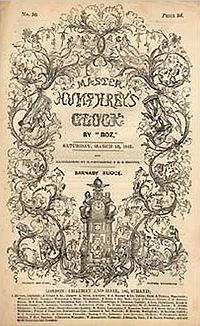
Waiting for the chime of the notification saying "A new chapter is available to download" is completely different from yet very much the same as crowds gathering at the dock to get the latest installment of a Dickens novel unloaded with the london paper.

The updated version:
"Serialized fiction, where episodes are delivered to readers in scheduled installments much like episodes in a television series, has been the subject of an unusual amount of experimentation in publishing in recent months. In September, Amazon announced Kindle Serials, stories sold for $1.99 and published in short episodes that download onto the Kindle as the episodes are released. Three of the first eight serials were produced by Plympton, a new literary studio. "
"In August, Byliner, a digital publisher, announced that it would begin a new digital imprint devoted to serialized fiction, with work by Margaret Atwoodand Joe McGinniss at its start." 
"One of the most talked-about new experiments is taking serialized fiction a step further. Set to make its debut on Monday, it is a novel called “The Silent History” that is available on the Apple iPhone and its iPad. It includes interactive, user-generated elements."
The Victorian version reached its peak with The Old Curiosity Shop, by Charles Dickens.
"The hype surrounding the conclusion of the series was unprecedented; Dickens fans were reported to storm the piers of New York City, shouting to arriving sailors (who might have already read the last instalment in the United Kingdom), "Is Little Nell alive?"
"In 2007, many newspapers claimed the excitement at the release of the last volume The Old Curiosity Shop was the only historical comparison that could be made to the excitement at the release of the last Harry Potter novel, Harry Potter and the Deathly Hallows.[5]"